Building the conversation object that became Conversive's platform foundation
0→30 enterprise customers in 7 months, built on the data model I spec'd.
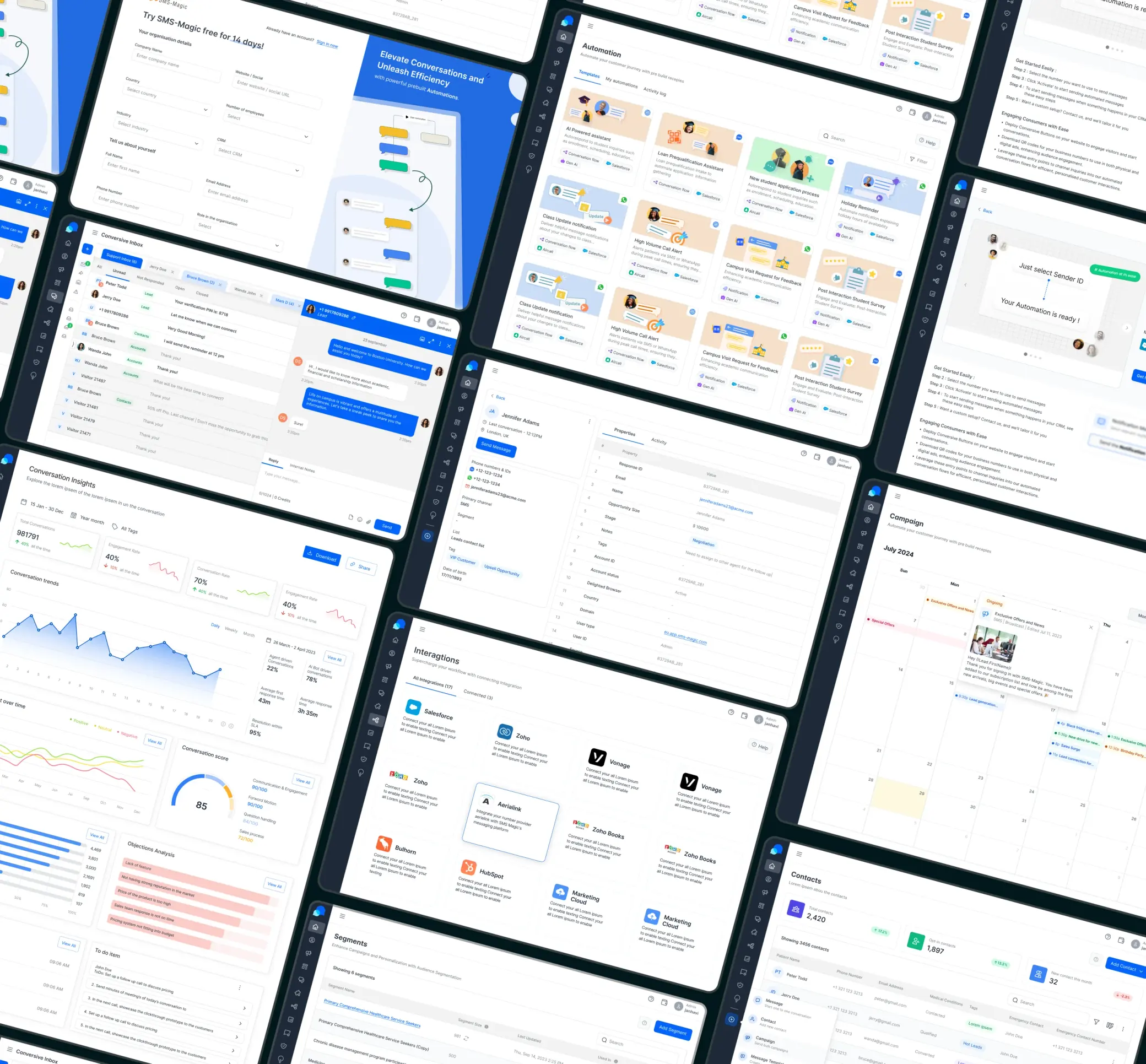
A slice of the Conversive product: inbox, automations, contacts, and analytics.
Conversive shipped with channels that didn't talk to each other. An agent could lose a candidate mid-screening just from a channel switch. I led the 0→1 build of the conversation object that fixed it: one unified thread across channels, with a single agent workspace to match.
Context
SMS-Magic had been a CRM-native messaging layer for 16+ years. Conversive was the bet to break free: live with SMS, WhatsApp, and Email, but each channel was still its own island.
The Problem
Agents were losing context every time a customer switched channels. Candidates got asked the same screening questions twice, and the same complaint kept surfacing in CS calls and O&I feedback.
They didn’t want to manage a mobile number. They wanted to manage a relationship with a person.
Present on every channel. Each one is its own island: separate threads, no shared context, agents repeat work.
Every channel feels like the same conversation. One thread, one history, context that survives a channel switch.
Discovery
The channel is not the conversation
Customers don’t think "I’m having a WhatsApp conversation." They think "I’m talking to this company."
Agents were working around the product
Teams were copy-pasting summaries between threads and keeping parallel CRM notes just to hold onto context.
Foundation before features
Shipping AI and channel-switching first would’ve just inherited the same disconnected architecture underneath.
Source: 7–8 enterprise interviews · 3 months of CS/O&I notes · Recruitment, Healthcare, Education
Key Decisions
Redefine "conversation" as a first-class object
Every omnichannel feature, from routing to journeys to analytics, needed this foundation to exist first.
Context continuity before real-time switching
Seeing history in one place solved 80% of the pain; switching itself could wait.
Own orchestration, integrate vertical intelligence
Kept the core product focused instead of rebuilding what integrations already do well.
Compete on orchestration, not channel count
Competitors treated channels as silos; ours runs AI at the conversation level.
How It Works
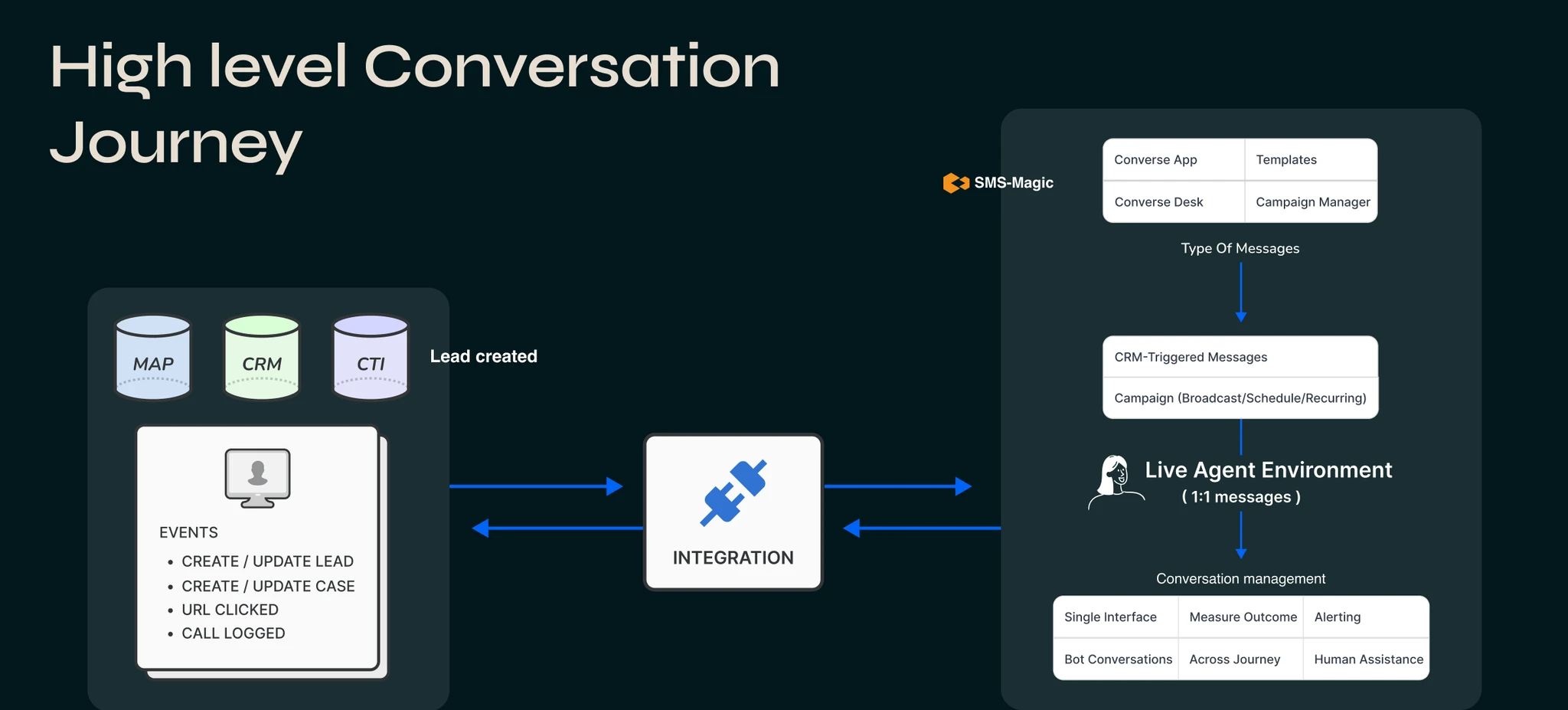
What We Built
Conversation as a unified object. Every interaction belongs to one entity with its own ID, lifecycle, and context memory.
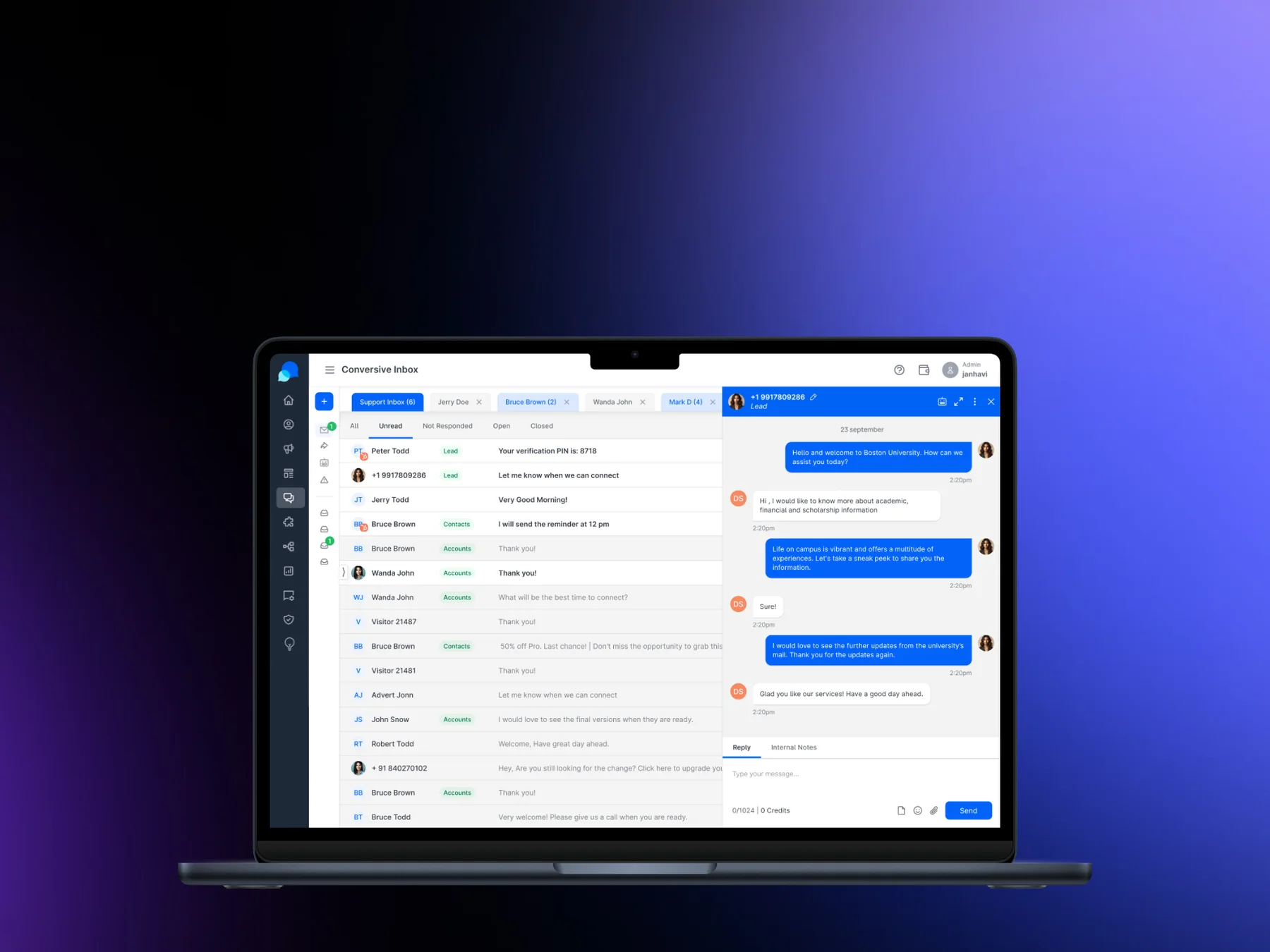
Unified agent workspace. One view of every channel, with no tab-switching and no duplicate records.
Context continuity across channels. The thread follows the customer; agents see history before typing a word.
Journey Orchestrator. A visual flow builder for multi-channel journeys triggered by real events.
AI-augmented routing & nudges. Sentiment shifts trigger automatic escalation or a nudge, in-context.
Cross-channel analytics. Unified dashboards at the conversation level, not per channel or campaign.
Outcome
We onboarded 10 enterprise customers to a beta, then shipped and refined toward a sellable V1, with no big-bang launch. Today all 30 customers run on the omnichannel foundation we built, on a brand-new product with no legacy upsell to lean on.
What I'd measure next: Context-preserved conversations % · Context-loss CSAT mentions · Cases per agent · Cross-channel conversion by vertical
What I'd Do Differently
Underestimated routing
Intent-driven routing needed to be a Phase 1 problem, not something we’d bolt on later.
Should’ve pushed harder on the architecture upfront
Multiple rounds of design still missed SLA and assignment edge cases that forced a mid-build change.
Voice was an unplanned curveball
An acquisition made a deliberately-deferred capability the next priority. Extensible architecture mattered more than I’d planned for.